IPTV Smarters Player PRO has emerged as one of the most popular IPTV applications for streaming live TV, movies, and series across multiple devices in 2025. This comprehensive guide explores everything you need to know about IPTV Smarters Player PRO, from its powerful features and installation methods to performance comparisons and expert recommendations for maximizing your streaming experience.
What Is IPTV Smarters Player PRO?
IPTV Smarters Player PRO is a professional-grade IPTV player application designed to deliver seamless streaming of live television, video-on-demand (VOD), and series content through internet protocols. Unlike basic media players, IPTV Smarters Player PRO offers advanced features including multi-screen support, electronic program guides (EPG), catch-up TV functionality, and comprehensive playlist management tailored specifically for IPTV services.
The application supports multiple playlist formats including M3U, M3U8, and Xtream Codes API integration, making IPTV Smarters Player PRO compatible with virtually every IPTV service provider worldwide. Whether you’re a cord-cutter seeking cable alternatives, an international content enthusiast, or a sports fan wanting reliable live streams, IPTV Smarters Player PRO provides the infrastructure for professional-quality streaming experiences.
IPTV Smarters Player PRO distinguishes itself through its user-friendly interface inspired by popular OTT platforms like Netflix and Prime Video, ensuring even novice users can navigate comfortably while providing advanced customization options for power users. The application’s adaptive streaming technology automatically adjusts video quality based on connection speed, minimizing buffering and maximizing viewing pleasure.
Key Features of IPTV Smarters Player PRO
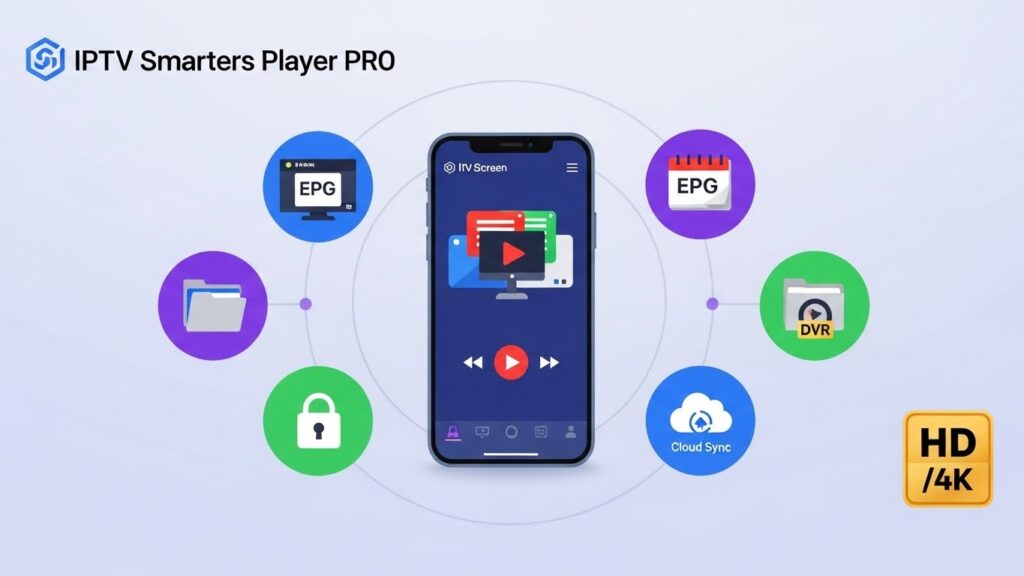
Understanding what makes IPTV Smarters Player PRO the preferred choice for millions of streamers worldwide requires examining its comprehensive feature set:
Multi-Screen Support and Simultaneous Viewing
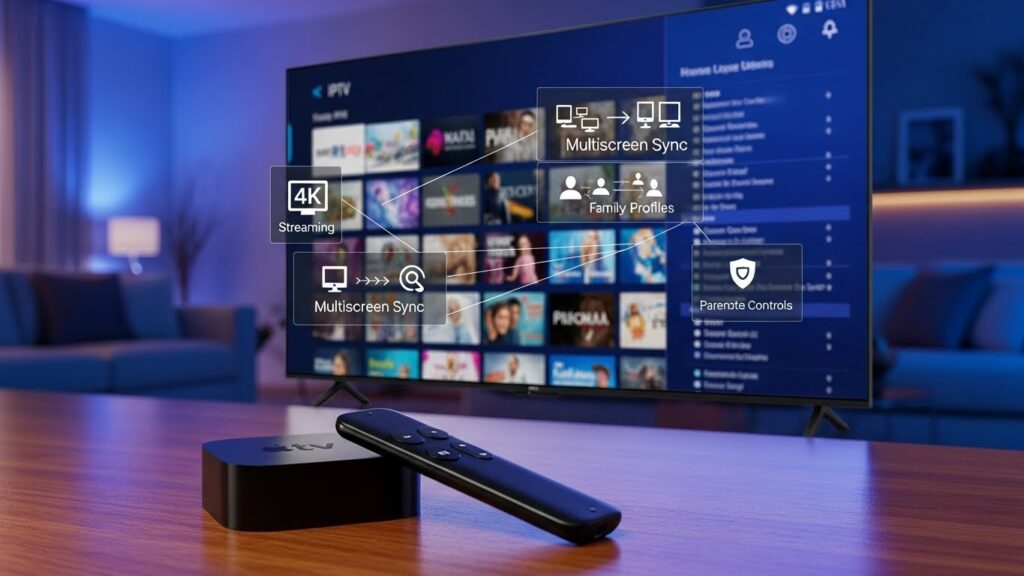
IPTV Smarters Player PRO enables users to watch different content simultaneously across multiple devices including smartphones, tablets, laptops, smart TVs, and streaming boxes. This multi-screen capability proves invaluable for families with diverse viewing preferences or sports enthusiasts monitoring multiple games concurrently. The synchronized playback ensures seamless transitions between devices—pause content on your phone and resume instantly on your television without manual bookmarking.
Advanced Electronic Program Guide (EPG)
The built-in EPG provides comprehensive television schedules displaying upcoming shows, program descriptions, start times, and duration information. IPTV Smarters Player PRO’s EPG integration allows users to browse channels efficiently, plan viewing schedules, set reminders for favorite programs, and access catch-up TV for previously aired content. The intuitive interface presents program information clearly, mimicking traditional cable guide experiences while adding modern search and filtering capabilities.
Comprehensive Playlist Management
IPTV Smarters Player PRO simplifies playlist management through easy import options via URL links or local files. Users can organize multiple playlists simultaneously, categorize channels by genre or language, create custom favorites lists, and utilize advanced search functionality for instant channel location. The application’s intelligent channel categorization automatically sorts content into Live TV, Movies, Series, and Catch-Up sections, eliminating confusion and streamlining navigation.
Superior Playback Technology
Adaptive streaming technology ensures crystal-clear video quality by automatically adjusting resolution based on available bandwidth. IPTV Smarters Player PRO supports multiple streaming protocols including HLS, MPEG-TS, RTMP, and DASH formats, guaranteeing compatibility with diverse IPTV services. The dual-player engine intelligently selects optimal playback methods for different content types, maximizing performance while minimizing technical issues.
External Subtitle and Multi-Audio Support
Full support for external subtitles in SRT and VTT formats allows international viewers to enjoy content in their preferred language. Multiple audio track support enables switching between original language, dubbed versions, commentary tracks, and audio descriptions for accessibility. These features make IPTV Smarters Player PRO ideal for multilingual households and viewers consuming international programming.
Parental Controls and Security Features
Comprehensive parental control options allow families to restrict content by rating, block specific channels or categories, require PIN codes for restricted access, and create separate child-safe profiles. These security measures protect children from inappropriate content while giving parents peace of mind about household streaming activities.
Picture-in-Picture Mode
Multitasking becomes effortless with IPTV Smarters Player PRO’s picture-in-picture functionality. Watch live content in a floating window while browsing channels, checking schedules, using other applications, or managing device settings. This feature proves particularly valuable during live sports events when monitoring multiple games or following social media reactions simultaneously.
DVR and Recording Capabilities
Schedule recordings for specific channels or shows directly within IPTV Smarters Player PRO. The built-in DVR functionality eliminates external recording device needs, allowing users to capture live content for later viewing, create series recordings for entire seasons, and manage recorded content libraries efficiently. Storage options include device internal memory, external storage, and network-attached storage (NAS) integration.
IPTV Smarters Player PRO Platform Compatibility
One of IPTV Smarters Player PRO’s greatest strengths lies in its exceptional cross-platform compatibility:
Android Devices
IPTV Smarters Player PRO runs flawlessly on Android smartphones, tablets, and TV boxes. Download directly from Google Play Store for verified security or sideload APK files for advanced users requiring specific versions. The Android version offers full feature access including multi-screen support, EPG integration, recording capabilities, and external player support.
Installation methods include official Google Play Store downloads for automatic updates and security, manual APK installation for users preferring specific versions, and Android TV optimization for large-screen viewing experiences.
iOS Devices (iPhone/iPad)
iPhone and iPad users access IPTV Smarters Player PRO through the Apple App Store, though availability varies by region. The iOS version maintains feature parity with Android counterparts while incorporating Apple-specific enhancements like iCloud synchronization potential, AirPlay casting to Apple TV, Touch ID/Face ID authentication for parental controls, and native iOS interface design patterns.
The recent iOS updates brought dual-player engine support, enhanced series playback with season navigation, favorites management for quick access, and performance optimizations for smoother streaming.
Amazon Fire TV and Fire Stick
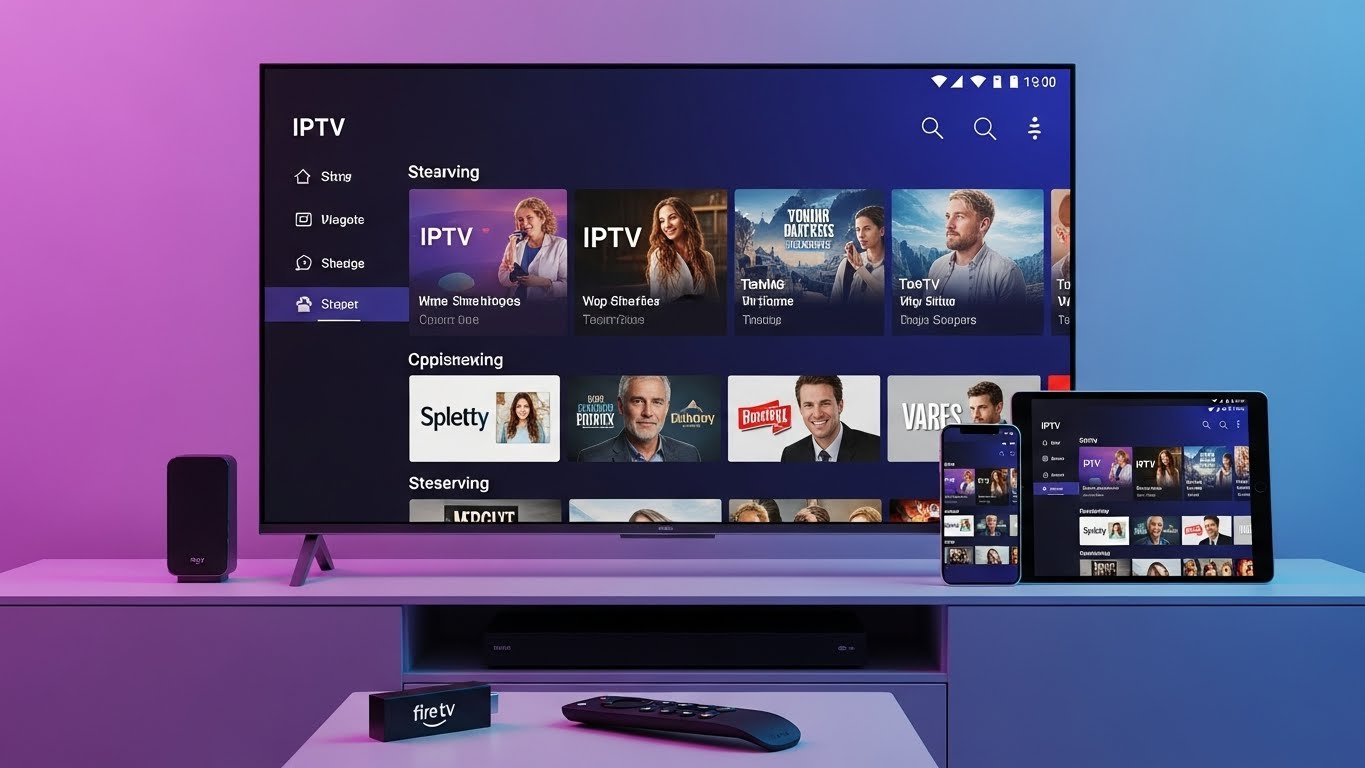
Fire TV devices represent popular platforms for IPTV Smarters Player PRO installation. The application’s interface scales perfectly for television viewing while maintaining responsive remote control navigation. Installation requires either Amazon Appstore downloads where available or sideloading via Downloader app for regions lacking official availability.
Windows and macOS Desktop
Desktop computer users enjoy IPTV Smarters Player PRO through dedicated Windows and macOS clients. Desktop versions provide additional advantages including larger screen real estate for enhanced viewing, keyboard shortcuts for efficient navigation, more powerful hardware for 4K streaming, and multi-monitor support for ultimate flexibility.
Smart TVs (Android TV, Roku)
IPTV Smarters Player PRO supports installation on Android TV-powered smart televisions from manufacturers including Sony, TCL, Hisense, and Philips. The native Android TV version optimizes interface elements for remote control navigation while leveraging television processing power for superior performance.
Web Browser Access
Some IPTV Smarters Player PRO implementations offer web browser access through Chrome, Safari, and Firefox. Browser-based streaming eliminates installation requirements while providing basic playback functionality for quick access scenarios or devices with limited app support.
How to Install IPTV Smarters Player PRO
Installation procedures vary by platform but follow similar patterns across devices:
Google Play Store Installation (Android)
- Open Google Play Store on your Android device
- Search for “IPTV Smarters Pro” or “Smarters Pro”
- Select the official application from WHMCS SMARTERS
- Tap “Install” and wait for download completion
- Launch the app once installation finishes
- Proceed to setup and configuration
Manual APK Installation (Android)
For users requiring specific versions or in regions lacking Google Play availability:
- Enable “Unknown Sources” in device security settings
- Download IPTV Smarters Player PRO APK from official website
- Locate downloaded file in file manager
- Tap APK file to begin installation
- Grant necessary permissions when prompted
- Launch app after installation completes
Apple App Store Installation (iOS)
- Open App Store on iPhone or iPad
- Search “Smarters IPTV Pro Player” or “Smarters Pro”
- Verify publisher authenticity
- Tap “Get” to download and install
- Authenticate with Face ID, Touch ID, or password
- Open app from home screen
Fire TV/Fire Stick Installation
Method 1: Amazon Appstore
- Navigate to Amazon Appstore on Fire device
- Search “IPTV Smarters Pro”
- Select and install if available in your region
Method 2: Sideloading via Downloader
- Enable Apps from Unknown Sources in Fire TV settings
- Install Downloader app from Amazon Appstore
- Open Downloader and enter APK URL
- Download and install IPTV Smarters Player PRO
- Launch from Apps & Channels section
Windows and macOS Installation
- Visit official IPTV Smarters website
- Download appropriate installer for your operating system
- Run installer file and follow on-screen instructions
- Grant necessary permissions during installation
- Launch IPTV Smarters Player PRO from applications folder
Setting Up IPTV Smarters Player PRO
After installation, configuration requires IPTV service credentials:
Xtream Codes API Configuration
Most IPTV providers use Xtream Codes API for authentication:
- Launch IPTV Smarters Player PRO
- Tap “Add New User” or “Login”
- Select “Login with Xtream Codes API”
- Enter server URL provided by IPTV provider
- Input your username and password
- Tap “Add User” to connect
- Wait for channel list loading
- Configure EPG and preferences
M3U Playlist Configuration
Alternative setup using M3U playlist URLs:
- Open IPTV Smarters Player PRO
- Select “Add New User”
- Choose “Load Your Playlist or File/URL”
- Select “Add URL” option
- Paste M3U playlist link from provider
- Name your playlist for easy identification
- Tap “Add” to load channels
- Configure EPG URL if provided separately
Initial Configuration Recommendations
Optimize IPTV Smarters Player PRO performance through proper initial settings:
- Enable auto-refresh for playlist updates
- Configure EPG URL for accurate program information
- Set video player preferences (internal vs external)
- Adjust subtitle and audio track defaults
- Configure parental control PIN codes
- Organize favorites for quick access
- Set up recording storage locations
- Enable notifications for scheduled recordings
IPTV Smarters Player PRO vs Competitors
Understanding how IPTV Smarters Player PRO compares to alternatives helps users make informed decisions:
IPTV Smarters Player PRO vs TiviMate
TiviMate represents IPTV Smarters Player PRO’s primary competitor, particularly on Android platforms.
| Feature | IPTV Smarters Player PRO | TiviMate |
|---|---|---|
| Platform Support | Android, iOS, Windows, Mac, Web | Android TV, Fire TV, Android mobile |
| Setup Complexity | Easy for beginners | Moderate learning curve |
| Interface | User-friendly, Netflix-inspired | Highly customizable, TV-focused |
| EPG Quality | Good, functional | Excellent, fastest loading |
| Customization | Moderate options | Extensive customization |
| Multi-Screen | Yes, all devices | Android ecosystem only |
| Recording | Built-in DVR | Advanced recording features |
| Price Model | Free + Premium subscription | Free version + one-time premium |
| Stability | Very stable | Exceptionally stable |
| Updates | Regular updates | Frequent updates |
Verdict: IPTV Smarters Player PRO wins for cross-platform versatility, easier setup, and broader device support. TiviMate excels for Android TV users seeking maximum customization and TV-like interface polish.
IPTV Smarters Player PRO vs GSE Smart IPTV
GSE Smart IPTV offers strong format compatibility and multi-language support:
- IPTV Smarters Player PRO Advantages: Better UI/UX design, easier playlist management, superior customer support, more frequent updates, better parental controls
- GSE Smart IPTV Advantages: Supports 31 languages, broader codec compatibility, Chromecast integration, free with one-time purchase, external player options
IPTV Smarters Player PRO vs Perfect Player
Perfect Player targets advanced users with technical expertise:
- IPTV Smarters Player PRO Advantages: Modern interface, easier configuration, better mobile support, official app store availability, active development
- Perfect Player Advantages: Extremely lightweight, highly customizable, works on older devices, powerful plugin system, free for basic features
IPTV Smarters Player PRO Performance Optimization
Maximize streaming quality through proper optimization:
Network Requirements
IPTV Smarters Player PRO streaming demands reliable internet connectivity:
- SD Content: 5 Mbps minimum
- HD 720p: 10 Mbps minimum
- Full HD 1080p: 20 Mbps minimum
- 4K UHD: 25-50 Mbps minimum
Connection Type Priority: Wired Ethernet > 5GHz Wi-Fi > 2.4GHz Wi-Fi
Test your connection speed using Speedtest by Ookla before troubleshooting playback issues.
Device Performance Considerations
Ensure your device meets IPTV Smarters Player PRO’s performance requirements:
- Modern processor (quad-core or better for 4K)
- Minimum 2GB RAM (4GB+ recommended)
- Updated operating system version
- Sufficient storage for recordings if using DVR
- Graphics acceleration for smooth playback
Application Settings Optimization
Configure IPTV Smarters Player PRO settings for best performance:
- Player Settings: Select appropriate decoder (Hardware+ recommended for most devices)
- Buffer Size: Increase buffer for unreliable connections (10-30 seconds)
- Video Quality: Set maximum resolution matching your connection speed
- EPG Refresh: Schedule automatic updates during off-peak hours
- Cache Management: Clear cache regularly to prevent slowdowns
- External Player: Consider VLC or MX Player for problematic streams
Troubleshooting Common Issues
Buffering Problems:
- Lower stream quality in settings
- Close background applications consuming bandwidth
- Switch to wired Ethernet connection
- Restart router and streaming device
- Contact IPTV provider about server issues
EPG Not Loading:
- Verify EPG URL correctness
- Manually refresh EPG in settings
- Check EPG data format compatibility
- Clear app cache and reload
- Contact provider for updated EPG URL
Channels Not Playing:
- Test different channels to isolate issue
- Update app to latest version
- Clear playlist cache and reload
- Try external player option
- Verify IPTV subscription status
Login Failures:
- Double-check username and password
- Verify server URL includes protocol (http:// or https://)
- Ensure subscription is active
- Test credentials on provider’s website
- Contact provider support for verification
Legal Considerations and Copyright Compliance
Using IPTV Smarters Player PRO responsibly requires understanding legal boundaries:
IPTV Smarters Player PRO Legality
The IPTV Smarters Player PRO application itself is completely legal—it’s simply a media player software. However, content legality depends entirely on your IPTV service provider having proper broadcasting licenses and distribution rights.
IPTV Smarters Player PRO’s terms of service explicitly state users bear sole responsibility for content they access through the application. The company maintains no control over user-accessed content, stores no cached files, and has no interaction with streamed material.
Copyright Infringement Risks
Using IPTV services lacking proper content licensing violates copyright laws in most jurisdictions. Legal consequences can include:
- Civil lawsuits from copyright holders
- Criminal charges in severe cases
- Substantial fines (ranging from hundreds to thousands)
- Internet service provider warnings and throttling
- Account termination by IPTV providers
Identifying Legal IPTV Services
Legitimate IPTV providers display these characteristics:
- Clear business registration and contact information
- Transparent pricing without suspiciously low rates
- Professional website and customer support
- Terms of service mentioning content licensing
- Payment through secure, traceable methods
- Realistic channel offerings for subscription price
Trusted legal IPTV services include YouTube TV, Sling TV, Hulu + Live TV, FuboTV, and Philo. For provider recommendations, explore top IPTV providers.
Country-Specific Regulations
IPTV legality and enforcement vary significantly by jurisdiction. Some countries aggressively prosecute users of unlicensed services while others focus enforcement on providers rather than consumers. For detailed country-by-country analysis, consult this comprehensive IPTV legality guide.
IPTV Smarters Player PRO Premium Features
Understanding premium versus free features helps determine upgrade value:
Free Version Capabilities
IPTV Smarters Player PRO’s free version includes:
- Basic playback functionality
- Single playlist support
- Standard EPG integration
- Live TV, VOD, and series streaming
- Basic channel organization
- Subtitle and audio track support
Premium Subscription Benefits
Upgrading to IPTV Smarters Player PRO premium unlocks:
- Unlimited playlist management
- Advanced parental controls with PIN protection
- External player integration (VLC, MX Player)
- Customizable themes and interface colors
- Priority customer support
- Ad-free experience
- Recording and DVR functionality
- Multi-user profiles
- Enhanced EPG features
- Picture-in-picture mode
- Faster playlist loading
- Cloud playlist storage
Pricing Structure
IPTV Smarters Player PRO premium typically offers flexible subscription options:
- 1 Month: Approximately £15.05 ($18-20 USD)
- 6 Months: Approximately £31.73 ($38-40 USD)
- 1 Year: Approximately £47.61 ($58-60 USD)
Pricing varies by region and promotional periods. Annual subscriptions offer significant savings compared to monthly billing.
Expert Tips for IPTV Smarters Player PRO Users
Maximize your experience with these professional recommendations:
Optimize Playlist Organization
- Create custom categories grouping related channels
- Use favorites for frequently watched content
- Hide channels you never watch to reduce clutter
- Organize channels by language for multilingual households
- Separate sports channels into their own category
- Create kids-only playlist for safe family viewing
Enhance Streaming Quality
- Schedule automatic playlist refreshes during low-usage hours
- Enable hardware acceleration in player settings
- Close unnecessary background applications
- Use quality routers supporting modern Wi-Fi standards
- Position streaming devices near routers or use mesh networks
- Consider powerline adapters for stable wired connections
Protect Privacy and Security
- Use reputable VPN services when streaming
- Avoid sharing IPTV credentials publicly
- Create strong, unique passwords for accounts
- Enable two-factor authentication where available
- Regularly update IPTV Smarters Player PRO to latest version
- Scan devices for malware periodically
Maximize Multi-Device Benefits
- Configure same playlists across all devices
- Use picture-in-picture for multitasking
- Cast to larger screens when appropriate
- Create separate profiles for family members
- Utilize recording features for time-shifting content
- Leverage catch-up TV for missed programs
Frequently Asked Questions About IPTV Smarters Player PRO
What is IPTV Smarters Player PRO and how does it work?
IPTV Smarters Player PRO is a professional IPTV application that streams live TV, movies, and series through internet protocols. The app connects to IPTV service providers via M3U playlists or Xtream Codes API, downloads channel lists, and streams content directly to your device. IPTV Smarters Player PRO handles video decoding, EPG integration, and user interface presentation while IPTV providers supply actual content streams.
Is IPTV Smarters Player PRO legal to use?
Yes, IPTV Smarters Player PRO itself is completely legal—it’s simply media player software. However, content legality depends on your IPTV service provider having proper broadcasting licenses. Users are solely responsible for ensuring their IPTV subscription provides legitimately licensed content. For country-specific regulations, see this IPTV legality guide.
What devices support IPTV Smarters Player PRO?
IPTV Smarters Player PRO runs on Android smartphones and tablets, iOS devices (iPhone/iPad), Android TV and Fire TV devices, Windows and macOS computers, smart TVs with Android TV, and web browsers. This cross-platform compatibility makes IPTV Smarters Player PRO one of the most versatile IPTV applications available.
How do I install IPTV Smarters Player PRO on Fire Stick?
Install IPTV Smarters Player PRO on Fire Stick either through Amazon Appstore (if available in your region) or via sideloading using Downloader app. For sideloading: enable Apps from Unknown Sources in settings, install Downloader from Appstore, open Downloader and enter IPTV Smarters Player PRO APK URL, install downloaded file, and launch from Apps & Channels.
What’s the difference between free and premium IPTV Smarters Player PRO?
Free IPTV Smarters Player PRO includes basic playback, single playlist support, and standard EPG. Premium unlocks unlimited playlists, advanced parental controls, external player support, custom themes, ad-free experience, DVR recording, multi-user profiles, and priority support. Premium subscriptions cost approximately £15-48 depending on duration (1 month to 1 year).
Which is better: IPTV Smarters Player PRO or TiviMate?
IPTV Smarters Player PRO excels in cross-platform compatibility, easier setup, and broader device support. TiviMate offers superior customization, faster EPG loading, and more polished TV-focused interface but only works on Android platforms. Choose IPTV Smarters Player PRO for multi-device households and simpler configuration; select TiviMate for Android TV users wanting maximum customization.
How do I fix buffering issues in IPTV Smarters Player PRO?
Resolve buffering by testing internet speed (minimum 10-20 Mbps for HD), switching to wired Ethernet connection, lowering stream quality in settings, closing background apps, increasing buffer size in player settings, restarting router and device, and contacting IPTV provider about server performance. Persistent buffering often indicates inadequate bandwidth or provider server issues.
Can I use IPTV Smarters Player PRO with multiple IPTV providers?
Yes, IPTV Smarters Player PRO supports unlimited playlists in premium version, allowing simultaneous configuration of multiple IPTV providers. Add each provider as separate user or playlist, switch between them easily through app interface, and organize channels from different providers into unified favorites lists for streamlined viewing.
Does IPTV Smarters Player PRO include built-in content?
No, IPTV Smarters Player PRO is strictly a media player application with no built-in content. Users must provide their own IPTV service subscription with M3U playlist URLs or Xtream Codes API credentials. The app only facilitates playback of content from user-supplied sources. For trusted IPTV provider recommendations, visit top IPTV providers guide.
How do I set up parental controls in IPTV Smarters Player PRO?
Configure parental controls by accessing app settings, enabling parental control features, creating PIN code, selecting content categories to restrict, blocking specific channels if needed, and creating separate child-safe profiles. Premium version offers more comprehensive parental control options including rating-based restrictions and time-based access limits.
Conclusion: Is IPTV Smarters Player PRO Right for You?
IPTV Smarters Player PRO stands as one of the most comprehensive, user-friendly, and feature-rich IPTV applications available in 2025. Its exceptional cross-platform compatibility, intuitive Netflix-inspired interface, robust playlist management, and advanced features like multi-screen support and DVR functionality make IPTV Smarters Player PRO suitable for users ranging from complete beginners to advanced streaming enthusiasts.
The application’s free version provides solid basic functionality for users testing IPTV services or operating on tight budgets, while premium subscriptions unlock professional-grade features justifying their cost for serious streamers. IPTV Smarters Player PRO’s regular updates, active development, and responsive customer support demonstrate long-term viability and commitment to user experience.
However, IPTV Smarters Player PRO’s quality ultimately depends on your IPTV service provider. The best application cannot compensate for unreliable providers, poor stream quality, or unlicensed content. Always choose legitimate IPTV services with proper licensing, transparent business practices, and reliable infrastructure. For recommendations, explore trusted IPTV providers.
Whether you’re cutting cable cords, accessing international programming, enjoying sports streaming, or building comprehensive home entertainment systems, IPTV Smarters Player PRO provides the robust platform for professional-quality IPTV experiences across all your devices.